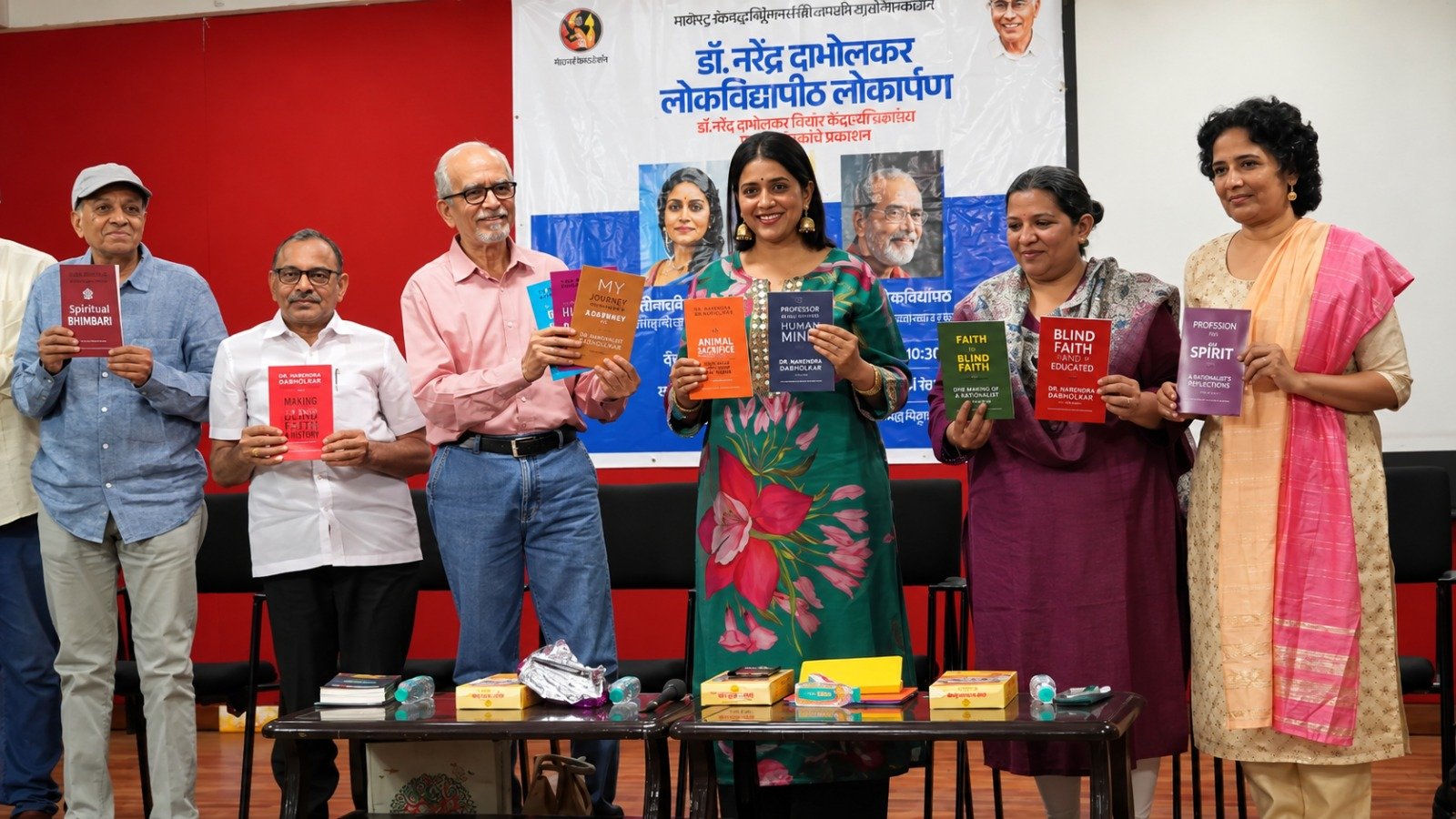
I have always felt that learning does not necessarily mean agreeing with everything someone says. Sometimes, it means being willing to listen to a perspective different from our own. It means recognising that our understanding can evolve, that traditions can be examined with sensitivity, and that asking a question need not be an act of disrespect.
The work of the Samiti, founded by Dr Dabholkar in 1989, is rooted in the belief that scientific thinking, critical inquiry and compassion have an important place in society. Its volunteers work to challenge harmful superstitions, raise awareness and protect people from exploitation carried out in the name of blind faith. For me, these conversations have been an invitation to reflect on a simple but important distinction: faith and unquestioning belief need not be the same thing. We can respect the personal beliefs of others while also asking whether a practice causes harm, denies someone dignity, or takes advantage of their vulnerability. I do not believe that understanding comes from having all the answers. More often, it begins with the willingness to ask better questions and the humility to acknowledge what we do not know.
I remain grateful for the opportunity to have encountered these ideas and for the people who continue to make room for such conversations. The work of the Samiti reminds me that a more thoughtful and compassionate society is built not by asking everyone to think alike, but by encouraging people to think freely, treat one another with dignity, and stand against exploitation wherever it occurs. Some lessons do not end with a meeting or a conversation. They stay with us, quietly shaping the way we see the world.